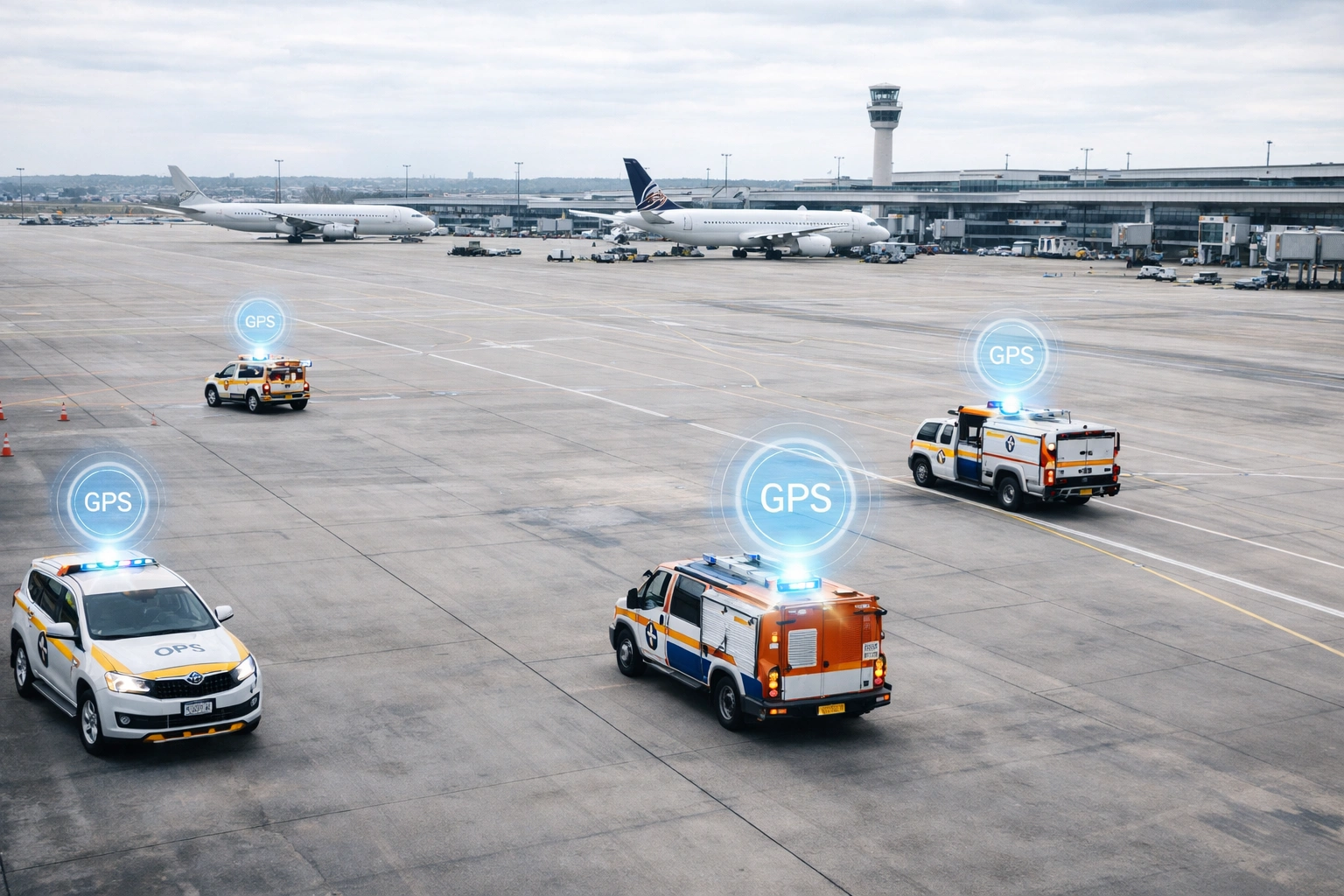

Recent incidents, including the collision between an aircraft and a fire truck at LaGuardia Airport, highlight a critical challenge in aviation: maintaining full situational awareness during ground operations.
While such events are rare, they demonstrate how complex and dynamic the airport environment can be — especially when multiple vehicles and aircraft operate simultaneously in confined areas under time pressure.
The Challenge
Ground operations involve:
- Aircraft, emergency vehicles, and service vehicles sharing the same movement areas
- Limited visibility conditions or high workload situations
- Communication dependencies between ATC, drivers, and operations teams
Even with existing surveillance systems, not all ground vehicles are always visible or identifiable in real time, which can increase the risk of miscoordination.
How OpsSky Improves Safety
OpsSky Ground addresses this gap by extending surveillance capabilities to all GPS-equipped vehicles, making them visible as ADS-B targets within existing airport systems.
Key Safety Benefits
- Full visibility of ground vehicles on the same display as aircraft
- Identification of each vehicle, not just detection
- Real-time tracking of emergency and operational assets
- Improved coordination between ATC and ground teams
By converting GPS data into standard ADS-B (ASTERIX CAT21), OpsSky ensures seamless integration with current surveillance infrastructure — without requiring costly transponders on every vehicle.
A Safer, Smarter Airside Environment
Incidents like LaGuardia serve as a reminder that situational awareness is key to safety.
With a cost-effective, scalable, and easy-to-deploy solution, OpsSky helps airports:
- Reduce the risk of ground collisions
- Improve operational coordination
- Enhance overall airside safety
Looking Forward
Airports are continuously evolving toward smarter and safer operations. Solutions like OpsSky support this evolution by ensuring that every moving asset is visible, identifiable, and trackable in real time.