Pain points we address
- ADS-B is powerful — but not universal.
- Many ground vehicles and small aircraft lack transponders.
- Full ADS-B equipage is costly, complex, and often not mandated.
Conventional radar-based surveillance systems do not provide full coverage of all targets, particularly in complex airport environments. Limitations exist in detecting low-altitude objects, ground movements, and targets outside radar coverage areas.
These gaps reduce situational awareness, especially during high traffic density and low visibility conditions, increasing the risk of ground conflicts and operational inefficiencies.
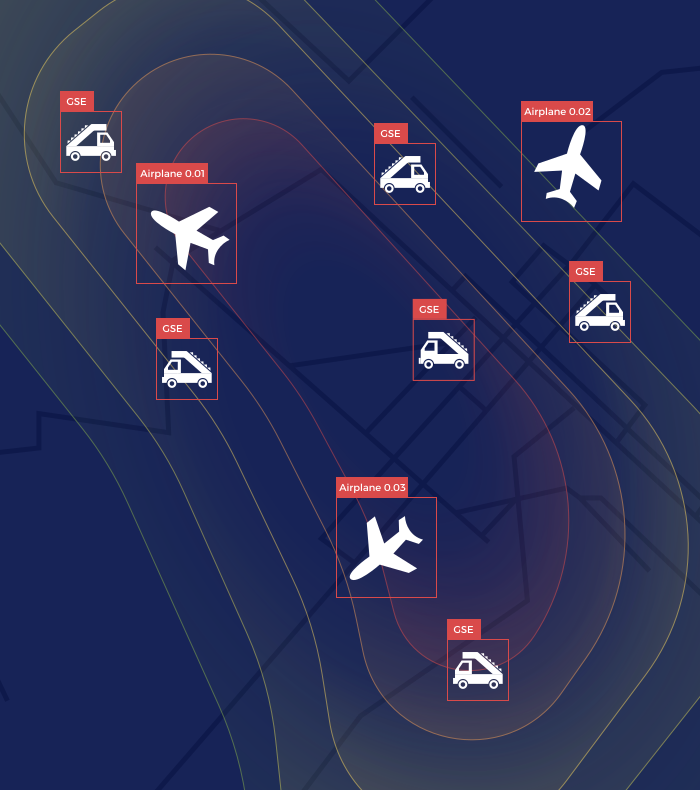
OpsSky Ground complements ADS-B surveillance with GPS-based tracking for non-ADS-B equipped targets. These trackers generate position data in a virtual ADS-B format.
All surveillance data is fused into a single, unified traffic picture, ensuring visibility of both airborne and ground movements regardless of equipage.
This approach enhances situational awareness, reduces blind spots, and supports safer and more efficient operations, particularly under low visibility procedures (LVP).
OpsSky Ground supports both cloud-based and on-premises deployment models, enabling alignment with operational and regulatory requirements.
Its modular architecture ensures seamless integration with existing airport and ATM systems, supporting scalable implementation and interoperability with current infrastructures.